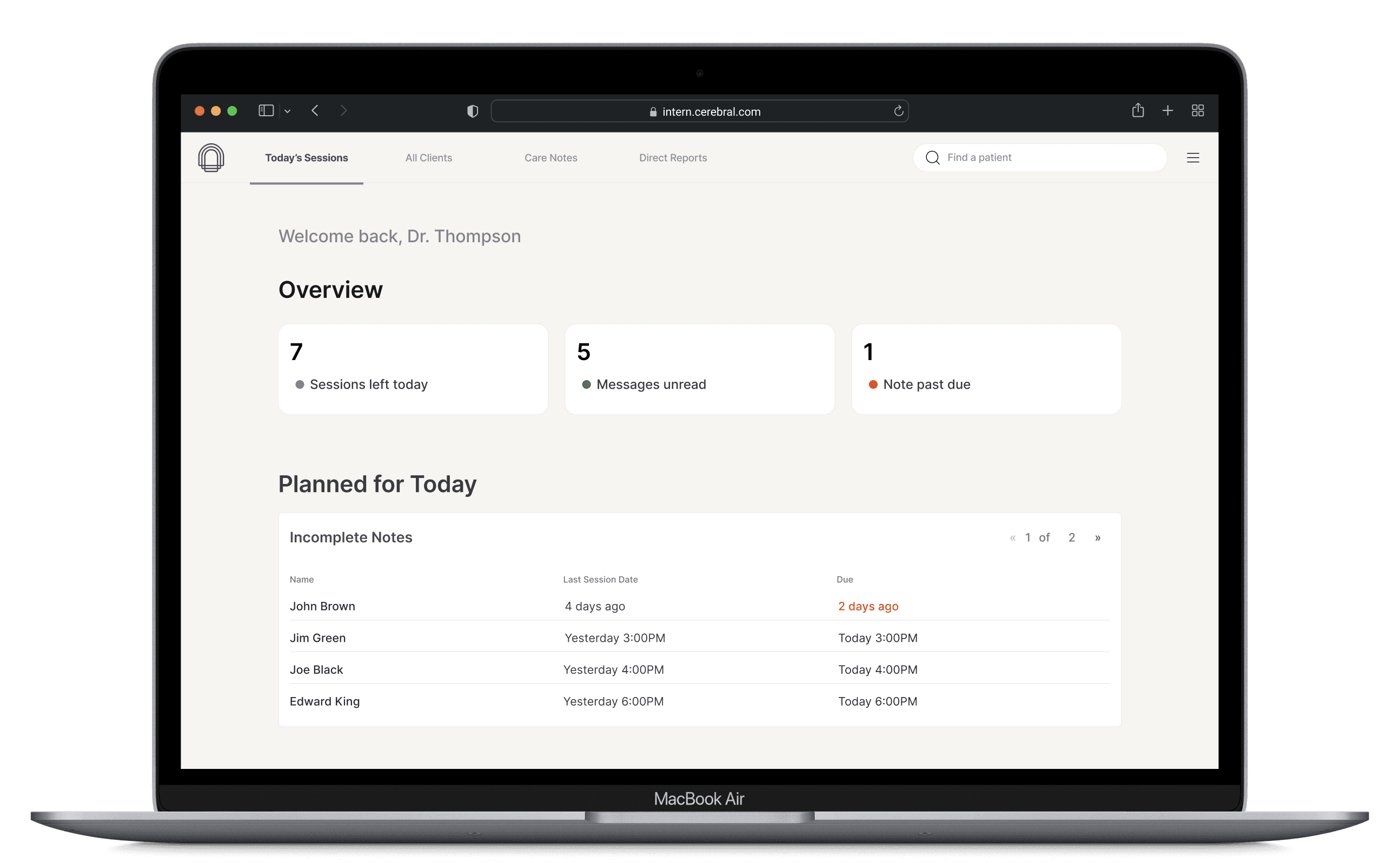
Note: The media and content of this case study is best viewed on desktop.

Electronic Medical Records (EMR/EHR) Dash Redesign

Cerebral

In Progress

Conceptual/Future state exploration

Product

Cerebral

Comprehensive, evidence-based mental health care

Snapshot

Surface: Desktop & Mobile

Role: Product Designer

Team: PM, Eng, Data/Analytics, Research, Clinical Operations, Brand

Scope: End-to-end assessments experience

Northstar: Increase 1st time insurance patient attendance rates

Baseline: 1% page visit rate, 40% assessment completion rate

TL;DR

Motivation Drop

New Cerebral insurance patients weren’t attending their 1st sessions representing decreased engagement which we attributed to lower motivation

Progress Reimagined

I led strategy + design to evolve the Assessments page into a progress experience: clear meaning, personalized guidance, and next steps.

Measured Lift

Launched as an A/B test with improvements in CSAT, assessment completion and visit attendance.

Context

Clinicians have given constant feedback that the existing Cerebral EMR is not very intuitive, making it hard to train new hires and maximize productivity among existing clinicians.

The EMR supports critical clinician workflows but was built in the company's early days under tight timelines and limited design resourcing. While functional, the interface leaves opportunities to improve clarity, prioritization, and cognitive load reduction for clinicians managing full caseloads.

This project explores what I would change if we had additional resourcing—without altering core functionality, data models, or clinical constraints.

The EMR supports critical clinician workflows but was built in the company's early days under tight timelines and limited design resourcing. While functional, the interface leaves opportunities to improve clarity, prioritization, and cognitive load reduction for clinicians managing full caseloads.

This project explores what I would change if we had additional resourcing—without altering core functionality, data models, or clinical constraints.

Problem

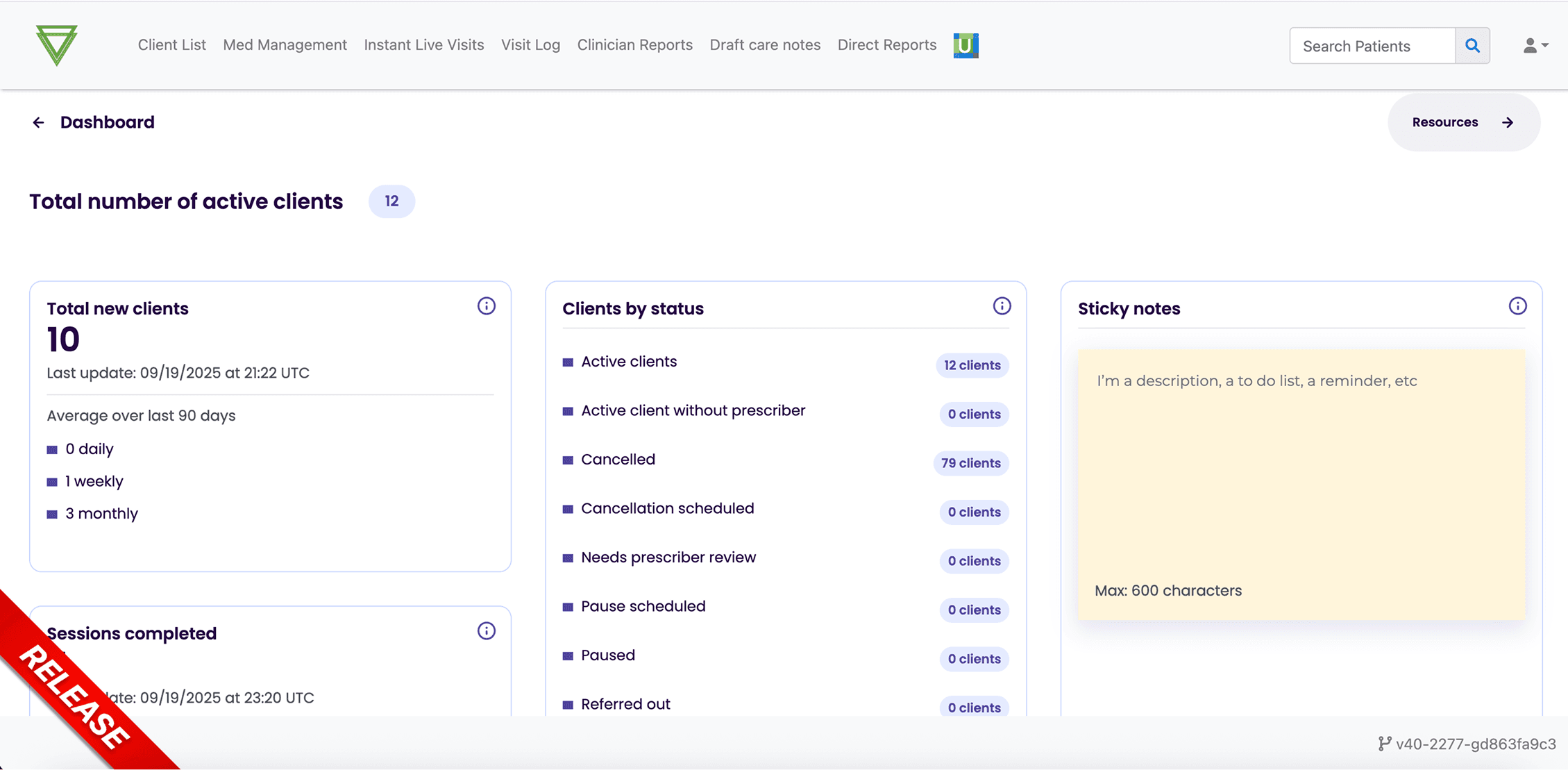
The existing page surfaces useful information but it's not easy to skim or quickly understand where action is most needed.

Why this matters

  • Competing visual weights make it harder to identify priorities

  • Passive metrics are emphasized over actionable tasks

  • Dense layouts increase cognitive load in an already high-stress environment

For clinicians, this can translate into slower task completion, missed notes, or delayed follow-ups.

Why this matters

  • Competing visual weights make it harder to identify priorities

  • Passive metrics are emphasized over actionable tasks

  • Dense layouts increase cognitive load in an already high-stress environment

For clinicians, this can translate into slower task completion, missed notes, or delayed follow-ups.

EXISTING CEREBRAL EMR DASH

Note: Some of the content/data here has been falsified for the purposes of the case study
Research Findings

My interviews with clinicians found that they struggled to find value in the home dash because:

01

Cognitive overload

Irrelevant or non-actionable content increases cognitive load and makes it harder to focus on priority tasks.

02

Context gaps

Clinicians struggle to quickly see a client’s current status, medications, or recent changes in one place.

03

Limited insight

Tracking a client’s progress over time requires extra effort and context switching.

04

Note inefficiency

Writing and submitting notes is time-consuming and does not align with clinicians’ natural workflows.

05

Workflow fragmentation

Key workflows are fragmented across the clinician dashboard and individual client files.

Solution

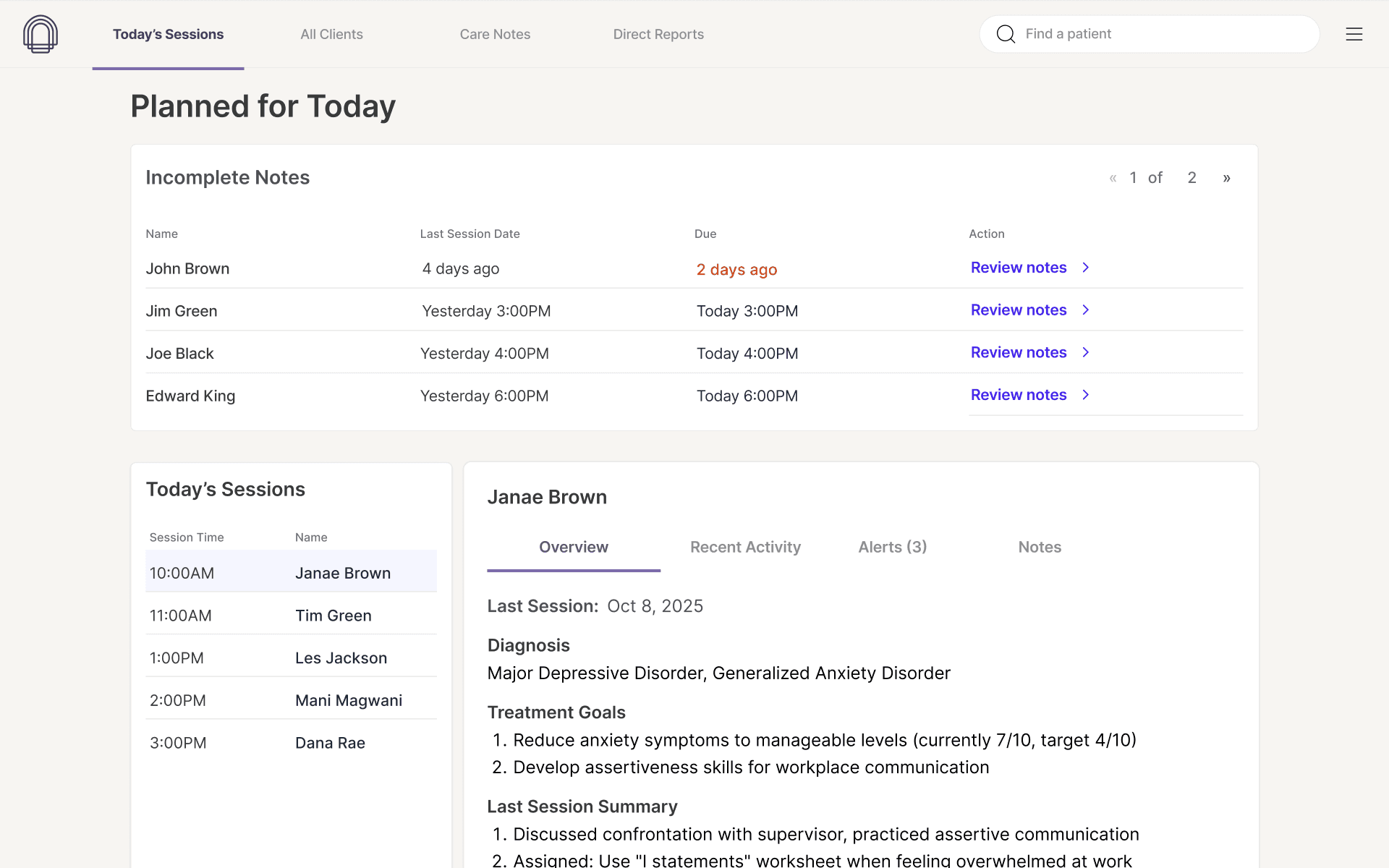
My proposed improvements prioritize focus and clear actionability, while modernizing the overall look and feel of the interface.

I decided to create a separate design system optimized for focus and clinical work—less bright and expressive than the consumer experience, but clearly rooted in Cerebral’s core visual language.

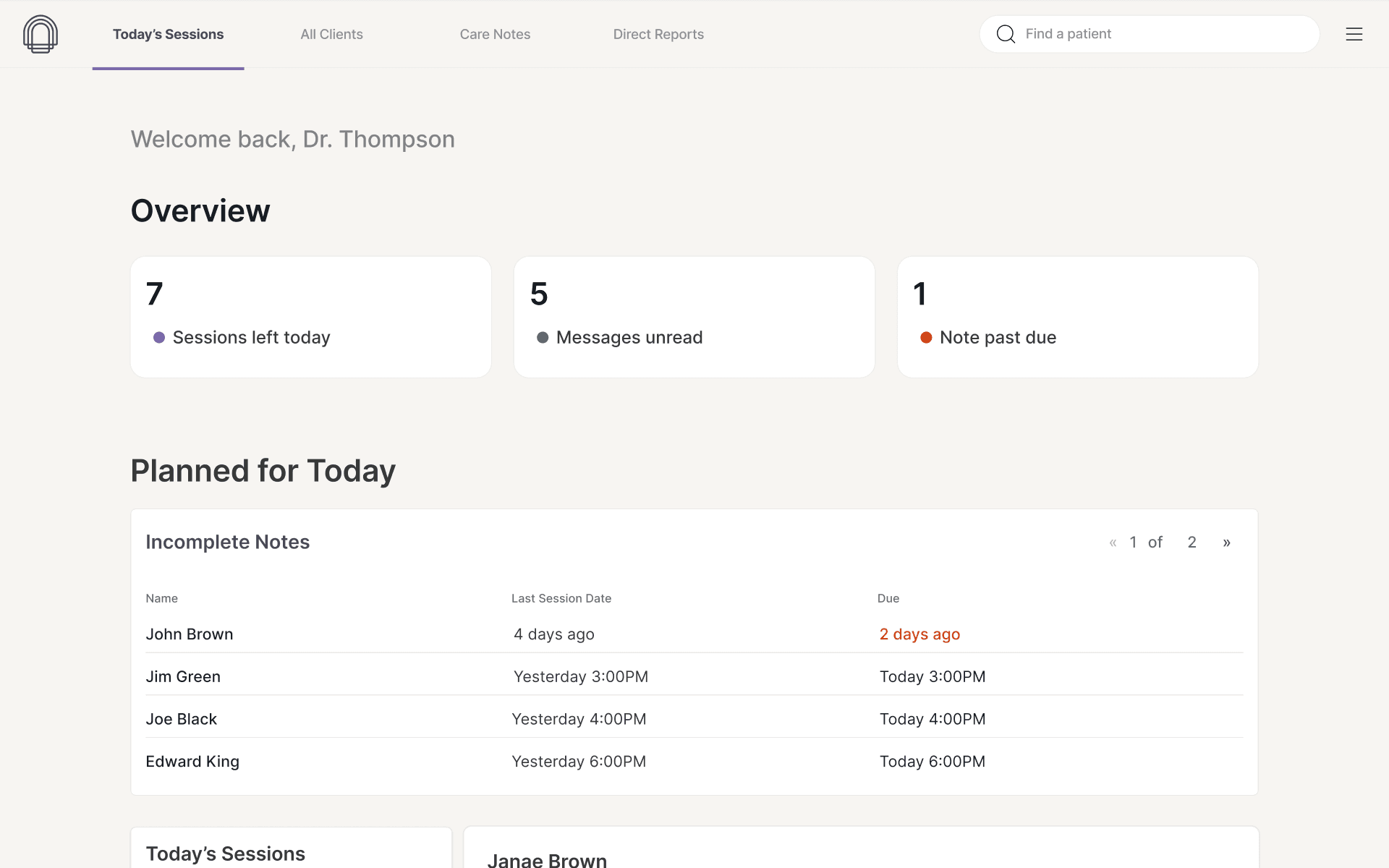
Simplify Navigation and Focus on Core Workflows
  • Eliminate less visited pages ie. Instant Live Visit, Visit Log etc

  • Elevate “Today,” “Past Due,” and “At-Risk” content

  • Remove passive stats that don't drive action


Why?

Clinicians need to immediately understand what requires attention now, not just what exists.

  • Eliminate less visited pages ie. Instant Live Visit, Visit Log etc

  • Elevate “Today,” “Past Due,” and “At-Risk” content

  • Remove passive stats that don't drive action


Why?

Clinicians need to immediately understand what requires attention now, not just what exists.

Reduce Cognitive Load Through UI Restraint
  • Introduce softer backgrounds and clearer spacing

  • Reduce competing accents and unnecessary borders

  • Standardize card rhythm and typographic hierarchy


Why?

In healthcare tools, good UI should feel steady and supportive, not visually demanding.

This approach emphasizes clarity, predictability, and calm.

  • Introduce softer backgrounds and clearer spacing

  • Reduce competing accents and unnecessary borders

  • Standardize card rhythm and typographic hierarchy


Why?

In healthcare tools, good UI should feel steady and supportive, not visually demanding.

This approach emphasizes clarity, predictability, and calm.

Align with Existing Clinician Mental Models
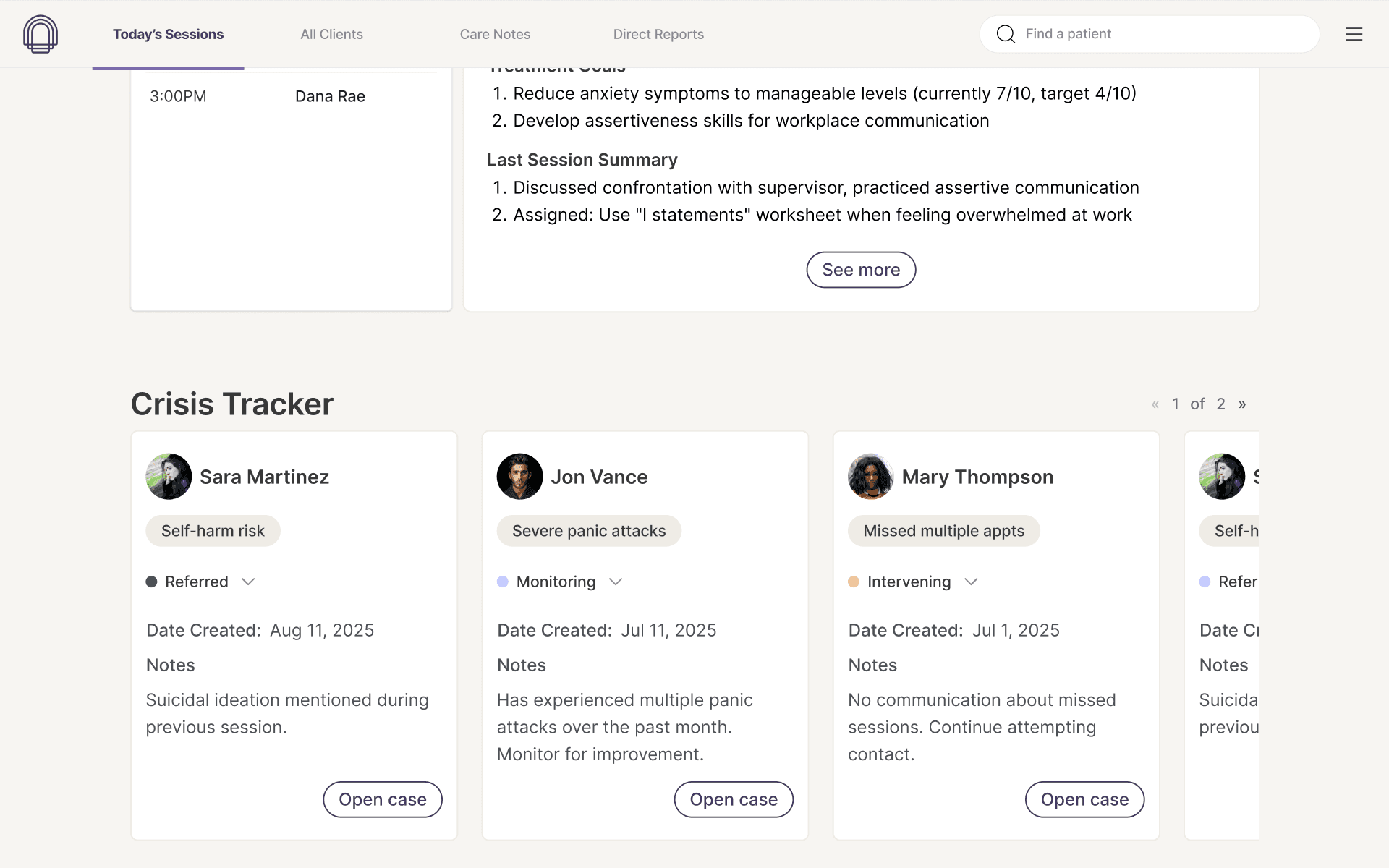
  • Group information by workflow rather than feature

  • Use progressive disclosure to avoid overwhelming the screen

  • Create consistent interaction patterns across sections


Why?

Design should reflect how clinicians already think: Who am I seeing, What’s overdue?, Is anyone at risk?

  • Group information by workflow rather than feature

  • Use progressive disclosure to avoid overwhelming the screen

  • Create consistent interaction patterns across sections


Why?

Design should reflect how clinicians already think: Who am I seeing, What’s overdue?, Is anyone at risk?

Next Steps

If this moved beyond concept, I’d validate it through:

  • Clinician shadowing or workflow interviews

  • Time-to-task analysis (e.g., note completion speed)

  • Stress-case testing (crisis scenarios, high caseload days)

I’d also continue to iterate other key pages of the clinical workflow ie. the patient directory, and tackle similar challenges on there as well.