From Cancellation to Care
Cerebral
•
6 weeks
Context
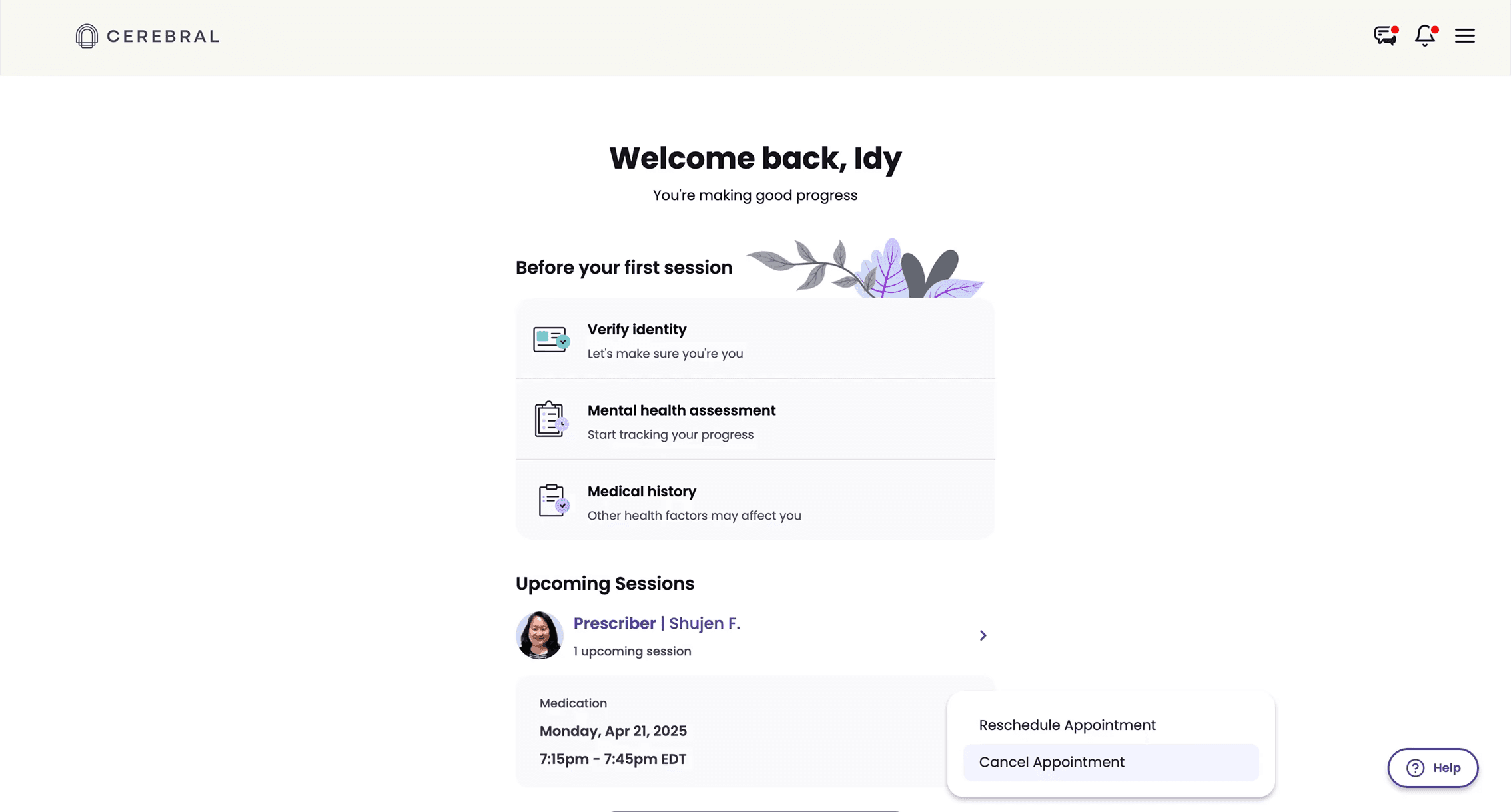
When something goes wrong in therapy or psychiatry, canceling the next session often feels like the easiest option.
Schedule change? Not connecting with your clinician? Cancellation came first—resolution came later or often not at all.
Problem
There was no guidance, alternative options or re-direction, creating:
High rates of avoidable cancellations
Missed sessions that negatively affect clinical outcomes
Clients leaving the platform without support
No visibility into why they were cancelling (logistical? therapeutic mismatch? technical issues?)
ORIGINAL CANCELLATION FLOW
Research Findings
Our research found patients had 2 main reasons for cancellations:
Not being able to quickly find a new date/time that worked for them
Not being able to quickly get an answer to a specific question related to the session
Goal
How might we…
help overwhelmed members navigate alternatives to cancellation so that they feel in control of their care?
Success Criteria
Short-term: Reduce cancellation rate
Medium-term: Increase month-over-month retention
Key Constraints
Regulatory compliance: the experience cannot appear to be deceptive, coercive or confusing
Implementation: it must be low-tech and relatively simple in the backend given our front-end eng had the most bandwidth
Counter-effects: it cannot increase missed visits, which negatively impacts clinicians' experience
What I Owned
Experience & operations strategy, information architecture, interaction design
Cross-functional collaboration with product, legal, operations and clinical stakeholders to ensure the experience complied with regulatory constraints while still feeling human and supportive.
Strategy
I created a strategy based on user-intent mapping
Cancellation behavior often looks the same on the surface—but the intent behind it rarely is.
This became the foundation for the information architecture and interaction design, ensuring each step of the flow addressed why a user was canceling, not just that they were. Then mapped each intent to a distinct design response.

Scheduling conflict
Intent
This time doesn’t work anymore.
Design Response
Surface rescheduling as the primary, lowest-effort option

Clinician fit
Intent
This doesn't feel like the right match
Design Response
Offer clinician switching with reassurance and clear next steps

Temporary friction or uncertainty
Intent
I'm not sure what to do
Design Response
Provide contextual guidance and access to support before exiting

True exit
Intent
I want to stop care
Design Response
Allow a fast, respectful cancellation without obstruction
Iterations
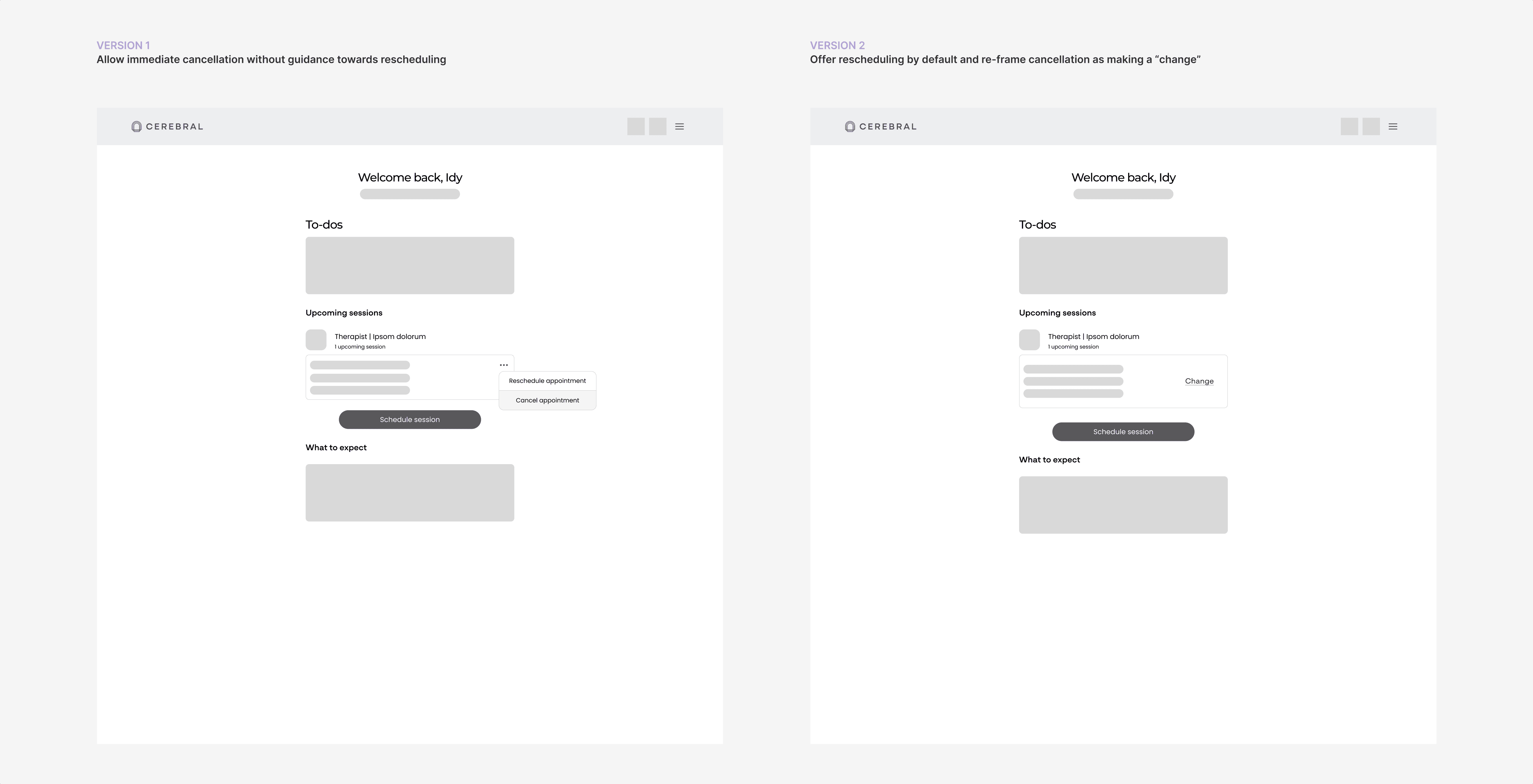
There were three key considerations that shaped the design approach.
Solution
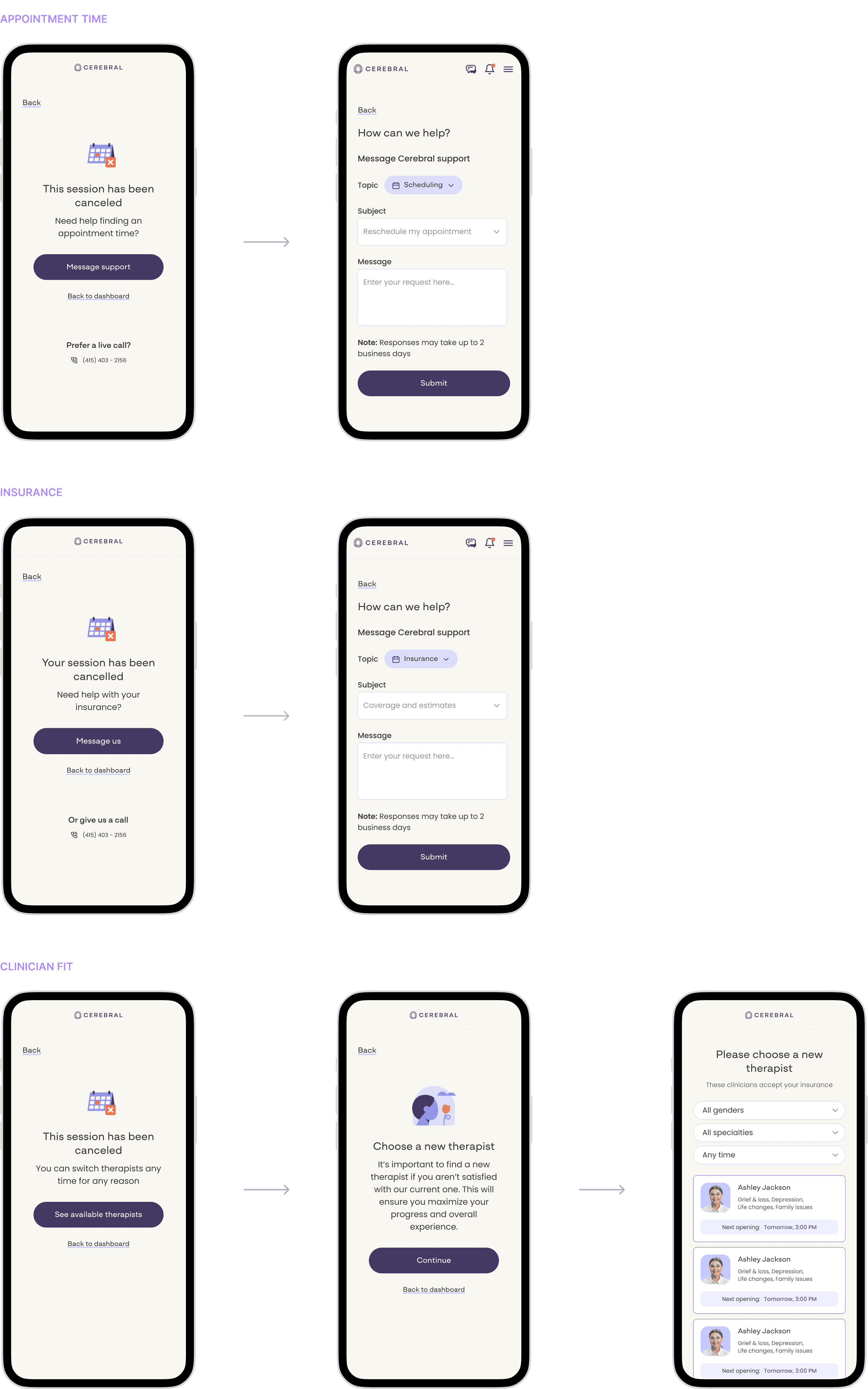
A re-designed cancellation flow with guided alternatives and insight into cancellation reasons
Encourage Rescheduling First
Most clients weren’t trying to quit care — they just couldn’t make that specific time. By surfacing rescheduling as the primary option, we helped users stay on track without feeling pressured or trapped.
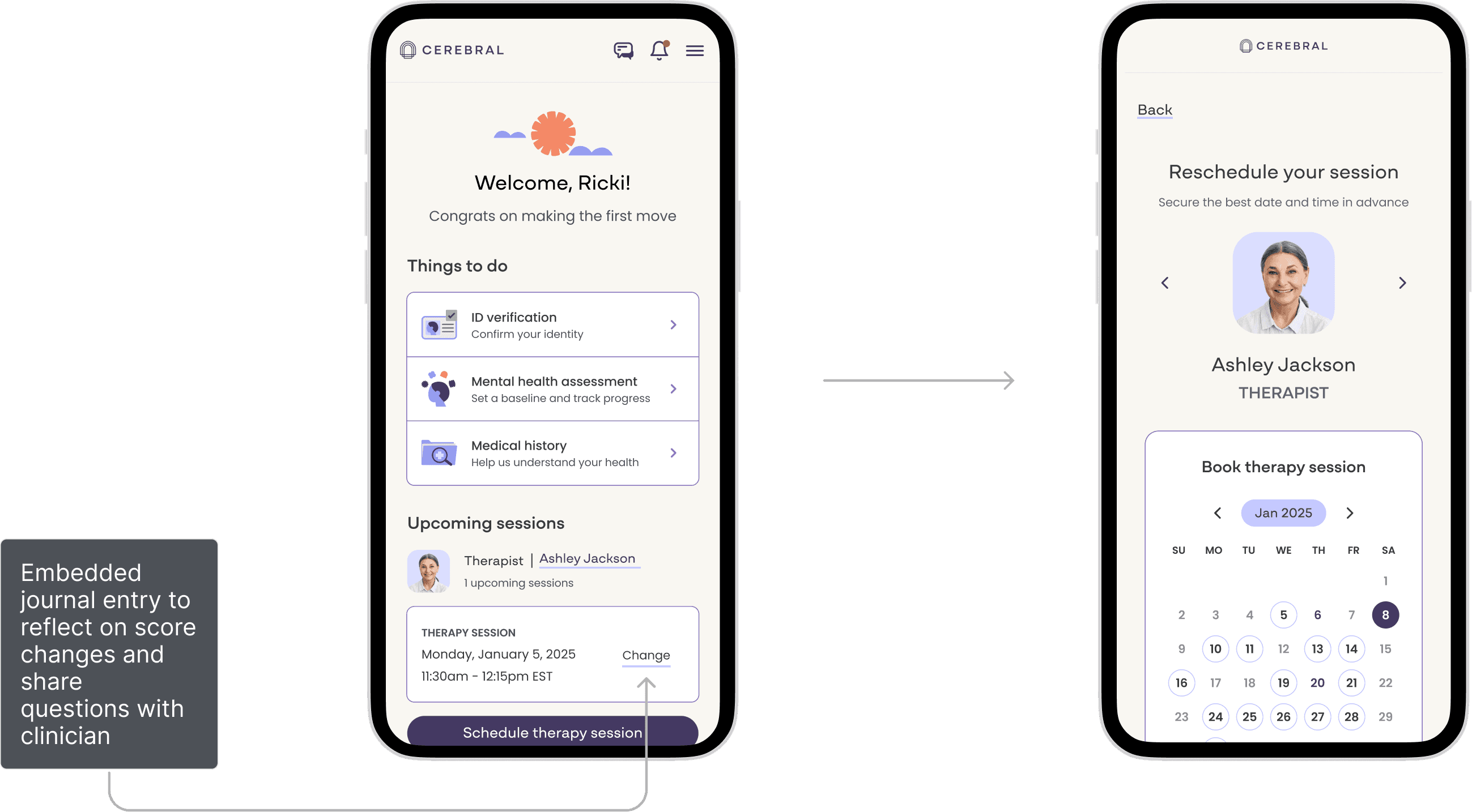
Understand Why They’re Cancelling
Collecting a simple cancellation reason gave users space to express what wasn’t working, while giving the product a clearer understanding of whether the issue was logistical, relational, or emotional.
Tailor Support Based on Their Needs
Once a user shared their reason, guide them toward the most helpful next step — whether that meant finding a better appointment time, requesting a new clinician, or getting support when they were struggling.
Impact
Both patients and business stakeholders benefitted from the updated flow.
Observations
Patients appreciated the opportunity to get additional support during unexpected roadblocks
ClinOps stakeholders modified clinician schedules and areas of focus to better meet client needs based on cancellation reasons
It kicked off a new initiative to provide same-day sessions and make it easier for patients to reschedule their sessions
+0
+0
Month 1 cancellation reasons & insights
-0%
-0%
Session cancellation
+0%
+0%
Monthly retention
Reflections
What I learned
Root cause analysis
It's important to dig deeper and uncover the intent behind consumers' actions instead of solving for symptoms.
Balance
Ethical friction can increase trust without feeling like unnecessary resistance.
Immediate resolution
Providing timely, same day sessions moved the needle significantly; meeting people at their time of need is critical.
Next Steps
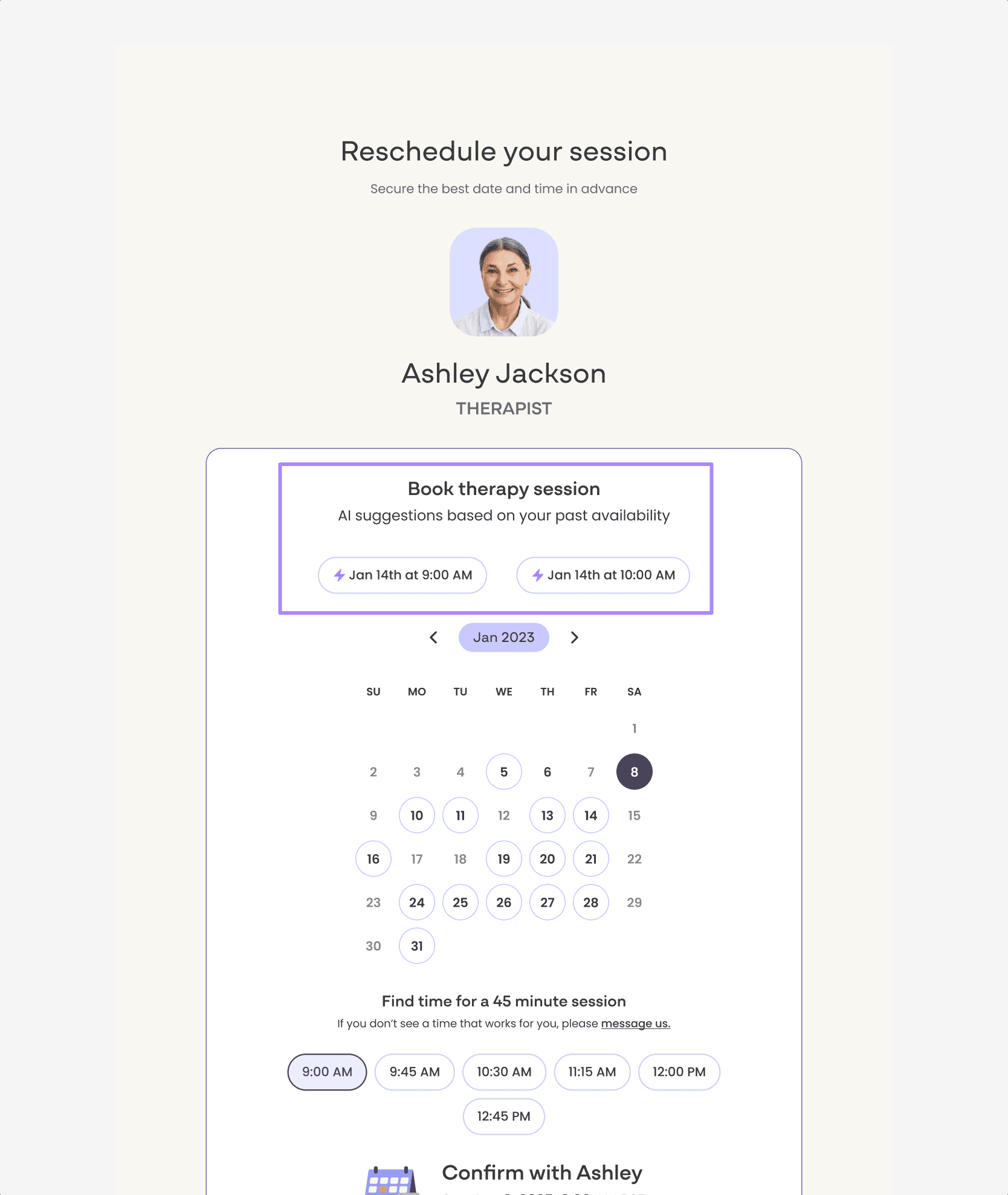
AI Scheduling Predictions
A natural future evolution for this project would be integrating AI to make scheduling even more seamless. Analyze historic scheduling patterns to identify and free up clinician schedules to days and times most likely to work for each patient
Conceptual design