Note: The media and content of this case study is best viewed on desktop.

Designing Chime's 1st Cross-Functional Case Management Tool

Chime

9 months

Product

Chime

Fintech company with fee-free mobile banking services, early access to paychecks and an interest-free secured credit card

Snapshot

Surface: Desktop

Role: Product Designer, Strategist

Team: PM, Eng, Data/Analytics, Research, Support Operations

Scope: End-to-end support case management experience

Northstar: Increase % of cases accurately resolved within SLA

Baseline: Estimated 80% of cases closed accurately & within SLA

TL;DR

Workflow Breakdown

Risk & Support agents relied on fragmented tools and manual tracking, making it difficult to prioritize work, meet regulatory SLAs, and maintain accuracy at scale.

Centralized Casework

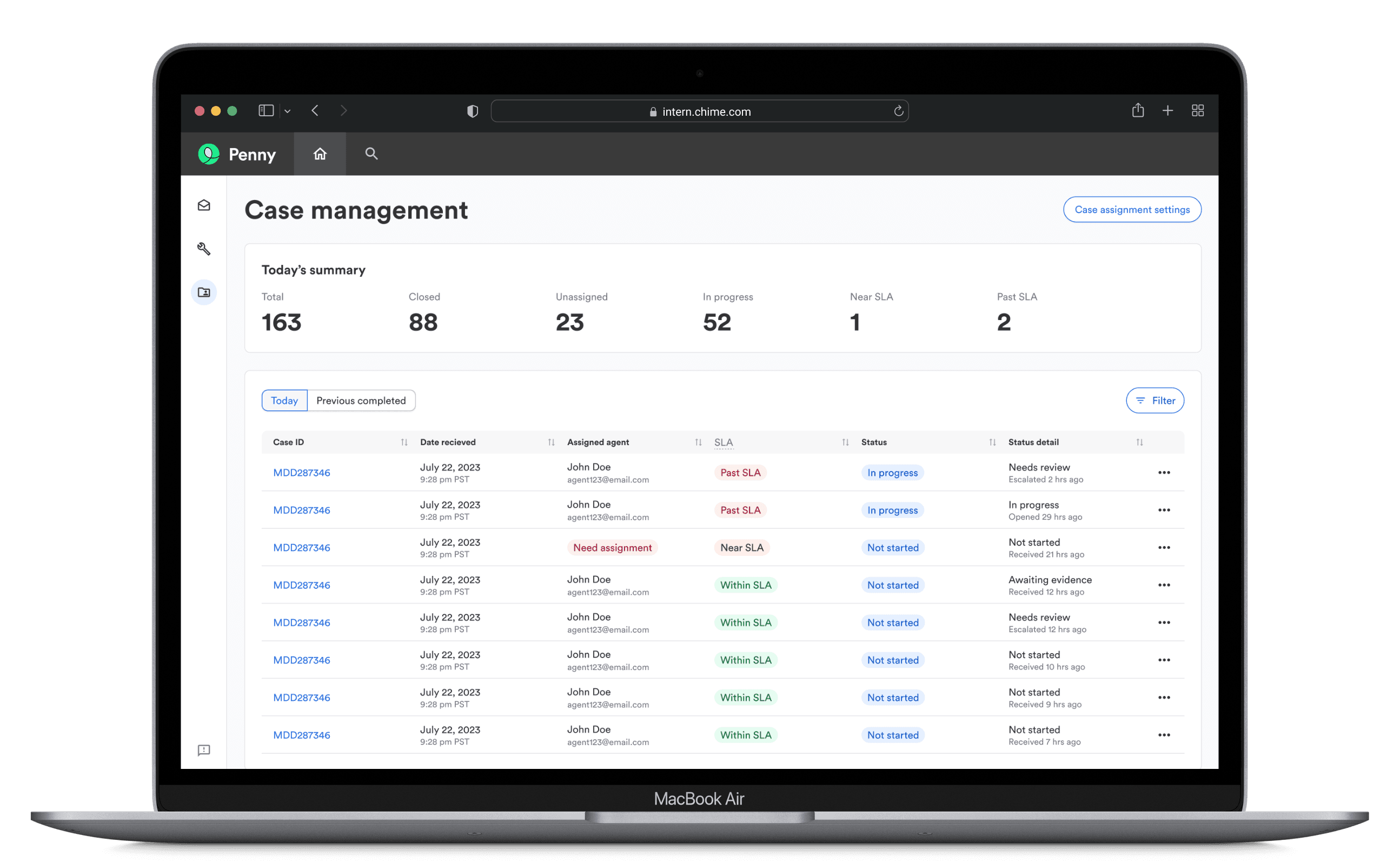
I pitched, strategized and designed a centralized case management MVP embedded within Chime’s internal platform, giving agents a singular, SLA-driven workflow connected directly to member data and audit history.

Scalable Foundation

The MVP was built for Direct Deposit agents but we leveraged built a versatile system to be used for any case type enabling future teams to adopt the framework without rebuilding tooling.

Context

Context

Context

Rapid growth pushed Chime’s risk and support teams to rely on makeshift workflows—spreadsheets, tickets, and external tools—to manage increasingly complex, regulated casework.

Over time, the company accumulated 10+ tools performing the same functions—driving more than $5M per year on average in combined subscription spend and compliance-related fines.

Problem

Problem

Problem

No centralized system existed to assign, prioritize, or track cases through completion.

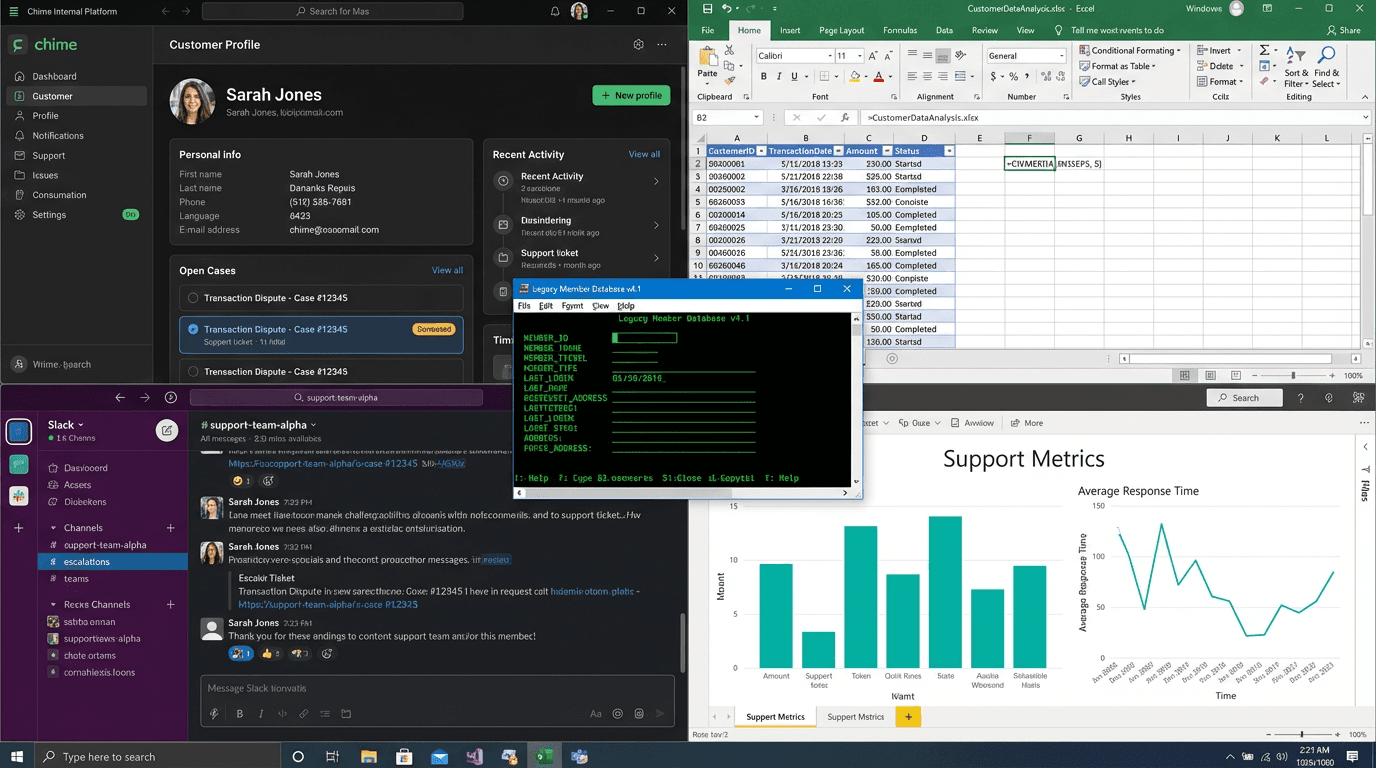
  • We started with the Direct Deposit team for MVP as a simple but critical use case. They were responsible for reviewing first-time deposits, verifying member identity, and flagging suspicious activity—yet they were managing this high-risk work through spreadsheets, Slack messages, and PowerBI dashboards.

  • As Chime scaled toward millions of members, these fragile workflows began to break down, leading to missed SLAs, processing errors, regulatory fines, and an increasing number of member complaints.

  • Delays in accessing funds eroded member confidence at a critical moment, while repeated compliance issues strained trust with regulatory partners and increased scrutiny from agencies like the CFPB.

SUPPORT AGENT DESKTOP

Conceptual visualization created for this case study via Nano Banana Pro AI. Not an actual representation of Chime systems or agent workflows.
Goal

Goal

Goal

Create a scalable case management MVP that:

  • Enables agents to meet review SLAs for unverified deposits

  • Integrates with Chime’s main internal member data platform (the source of truth)

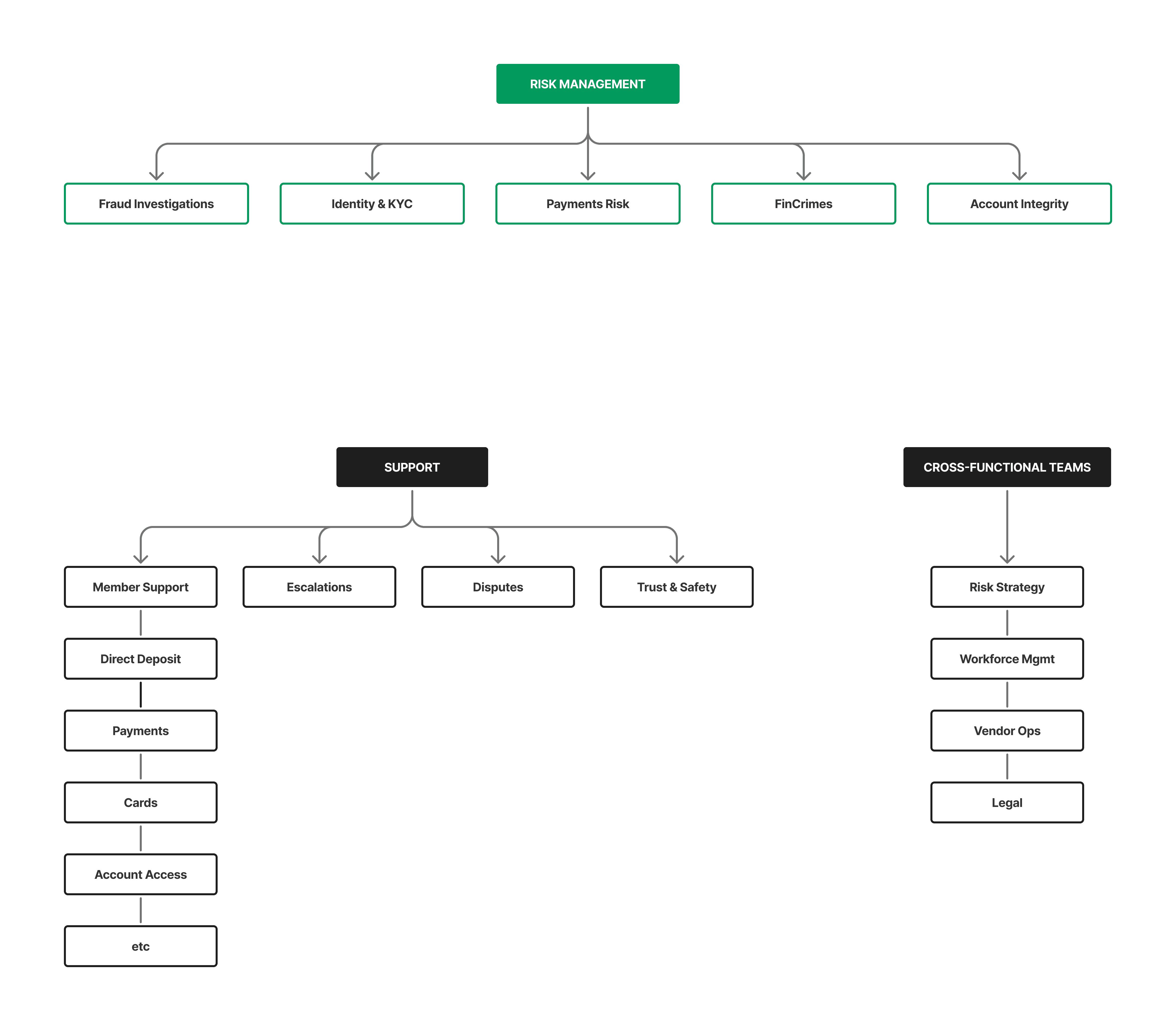
  • Is extensible — allowing other Risk & Support functions to use the same framework without rebuilding

  • Provides auditability and consistent workflows to reduce regulatory exposure

OUR MVP WOULD NEED TO SCALE ACROSS ALL RISK & SUPPORT OPERATIONS

Conceptual visualization created for this case study via Nano Banana Pro AI. Not an actual representation of Chime systems or agent workflows.
Key Constraints

  • Eng bandwidth: the system had to be light-weight enough for a small team of 2 staff engineers to scale up quickly

  • Design UI: must leverage the existing design system for internal tools in order to accelerate development time

Key Constraints

  • Eng bandwidth: the system had to be light-weight enough for a small team of 2 staff engineers to scale up quickly

  • Design UI: must leverage the existing design system for internal tools in order to accelerate development time

Key Constraints

  • Eng bandwidth: the system had to be light-weight enough for a small team of 2 staff engineers to scale up quickly

  • Design UI: must leverage the existing design system for internal tools in order to accelerate development time

Process

Process

Process

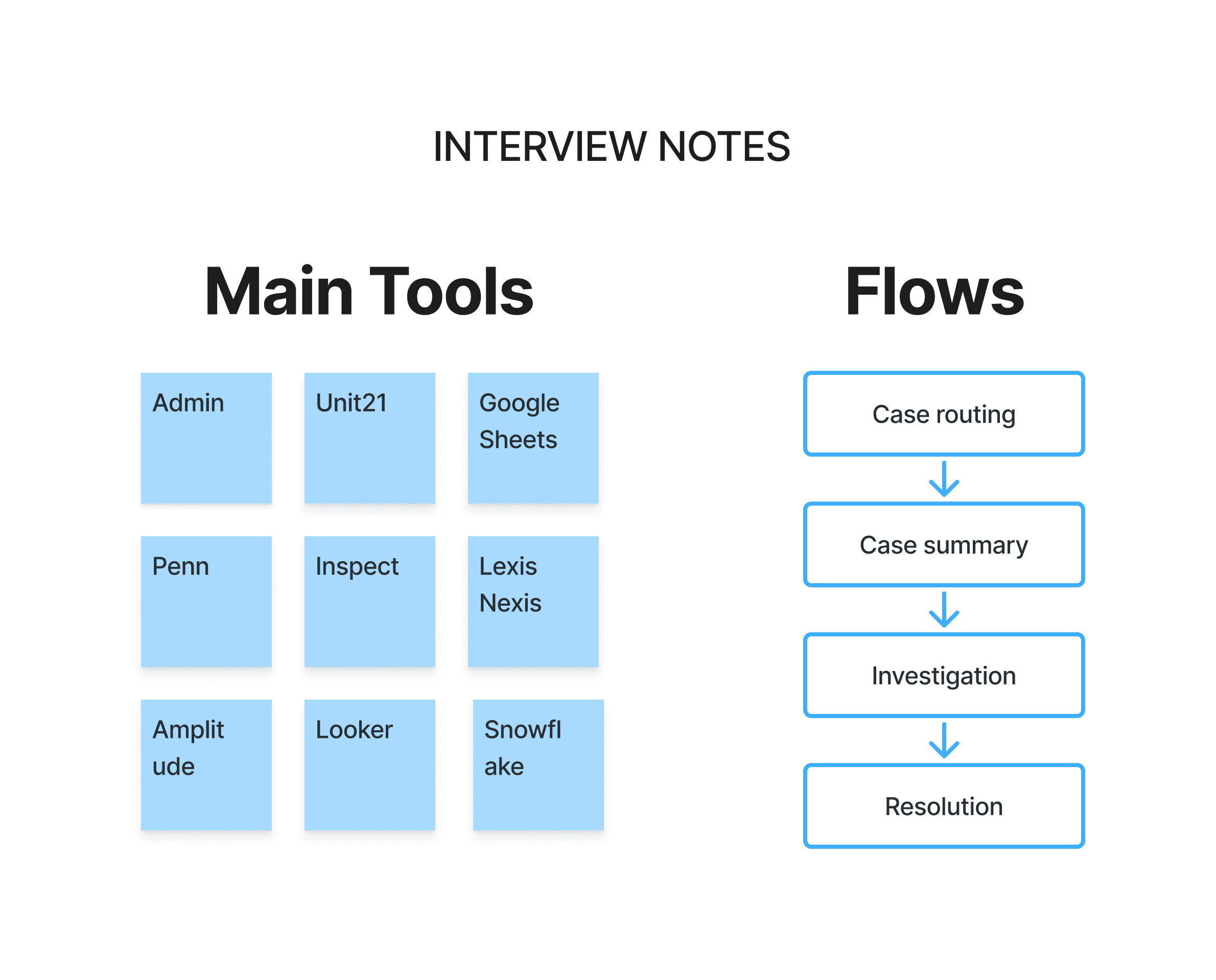
I gathered extensive data from across agents, leads and cross-functional partners to understand the current state & begin visualizing the ideal state.

Research methods

Live agent shadowing

Sat with Direct Deposit agents during live case reviews to observe how they prioritized work, switched tools, and handled edge cases. Helped surface hidden workarounds, cognitive load, and moments where errors were most likely.

Team lead interviews

Conducted semi-structured interviews with team leads, risk managers, and compliance partners to understand SLA requirements, audit needs, and failure points. Ensured the design balanced usability with regulatory constraints.

Artifact review

Analyzed spreadsheets, Slack threads, tickets, and PowerBI dashboards agents relied on. Helped identify what information was critical vs. noise.

Journey mapping

Mapped the end-to-end case lifecycle from intake to resolution, including handoffs and escalations. Highlighted bottlenecks, duplicate effort, and unclear ownership.
Live agent shadowing

Sat with Direct Deposit agents during live case reviews to observe how they prioritized work, switched tools, and handled edge cases. Helped surface hidden workarounds, cognitive load, and moments where errors were most likely.

Team lead interviews

Conducted semi-structured interviews with team leads, risk managers, and compliance partners to understand SLA requirements, audit needs, and failure points. Ensured the design balanced usability with regulatory constraints.

Artifact review

Analyzed spreadsheets, Slack threads, tickets, and PowerBI dashboards agents relied on. Helped identify what information was critical vs. noise.

Journey mapping

Mapped the end-to-end case lifecycle from intake to resolution, including handoffs and escalations. Highlighted bottlenecks, duplicate effort, and unclear ownership.

Live agent shadowing

Sat with Direct Deposit agents during live case reviews to observe how they prioritized work, switched tools, and handled edge cases. Helped surface hidden workarounds, cognitive load, and moments where errors were most likely.

Team lead interviews

Conducted semi-structured interviews with team leads, risk managers, and compliance partners to understand SLA requirements, audit needs, and failure points. Ensured the design balanced usability with regulatory constraints.

Artifact review

Analyzed spreadsheets, Slack threads, tickets, and PowerBI dashboards agents relied on. Helped identify what information was critical vs. noise.

Journey mapping

Mapped the end-to-end case lifecycle from intake to resolution, including handoffs and escalations. Highlighted bottlenecks, duplicate effort, and unclear ownership.

Key Insights

  • Without clear SLA signals or queues, agents relied on personal judgment to prioritize work—resulting in inconsistent decisions and missed deadlines.

  • Member history and case-relevant information lived across multiple systems, increasing cognitive load and the risk of overlooking important details.

  • Multi-tier internal and external escalations lacked structure and visibility, forcing agents and leads into manual follow-ups that slowed resolution.

  • Disputes, fraud, legal, and other risk and support teams followed nearly identical case patterns despite different data sources and outcomes, revealing an opportunity for a reusable, adaptable case framework.

Key Insights

  • Without clear SLA signals or queues, agents relied on personal judgment to prioritize work—resulting in inconsistent decisions and missed deadlines.

  • Member history and case-relevant information lived across multiple systems, increasing cognitive load and the risk of overlooking important details.

  • Multi-tier internal and external escalations lacked structure and visibility, forcing agents and leads into manual follow-ups that slowed resolution.

  • Disputes, fraud, legal, and other risk and support teams followed nearly identical case patterns despite different data sources and outcomes, revealing an opportunity for a reusable, adaptable case framework.

Key Insights

  • Without clear SLA signals or queues, agents relied on personal judgment to prioritize work—resulting in inconsistent decisions and missed deadlines.

  • Member history and case-relevant information lived across multiple systems, increasing cognitive load and the risk of overlooking important details.

  • Multi-tier internal and external escalations lacked structure and visibility, forcing agents and leads into manual follow-ups that slowed resolution.

  • Disputes, fraud, legal, and other risk and support teams followed nearly identical case patterns despite different data sources and outcomes, revealing an opportunity for a reusable, adaptable case framework.

Solution

Solution

Solution

A centralized case management MVP converting Chime's strong internal branding to a completely new tool with intuitive UX.

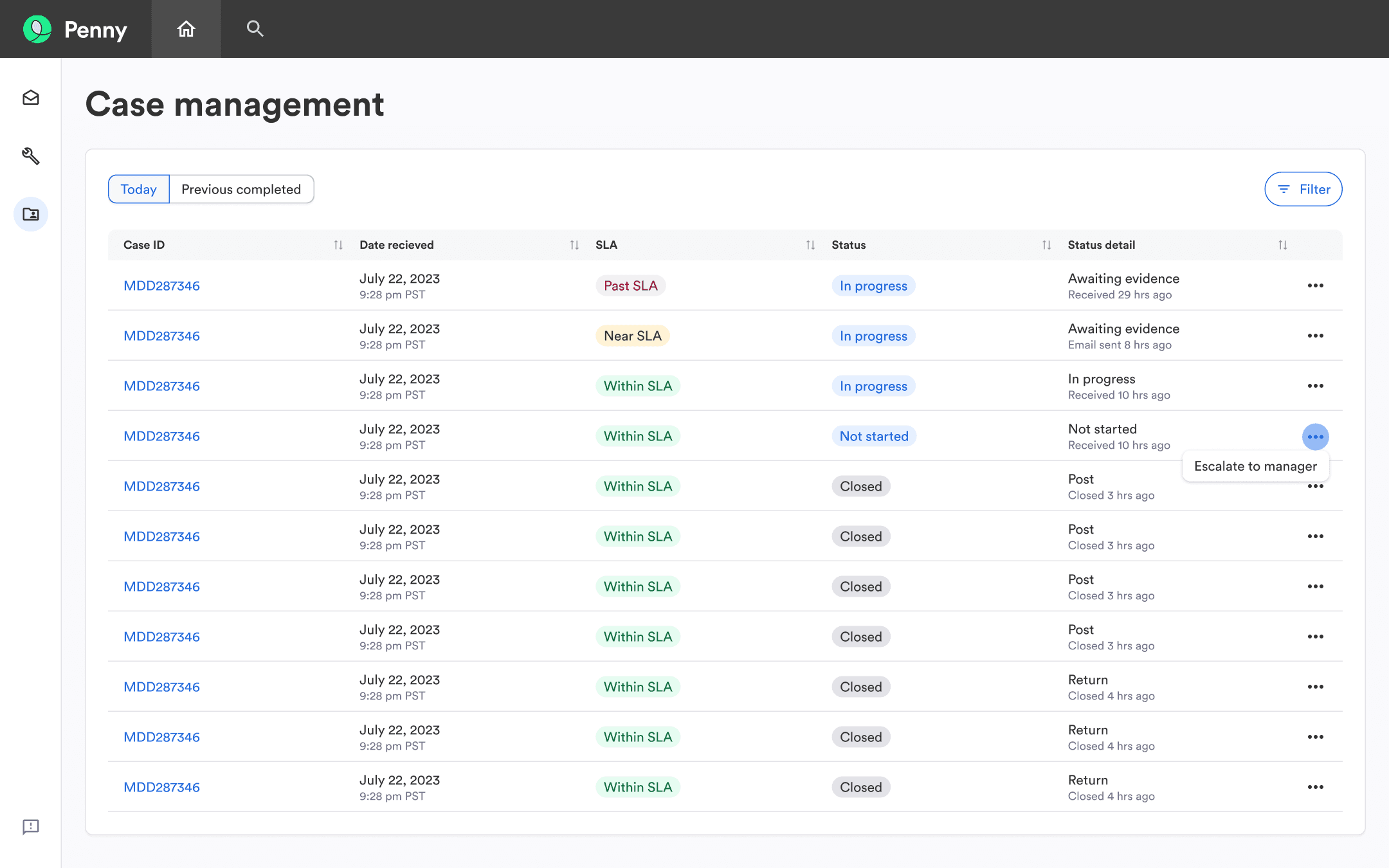
Agents can now work from a unified queue

We eliminated 5+ external tools for a singular tool with integration across all sources of direct deposit data and automated case assignment and SLA tracking.
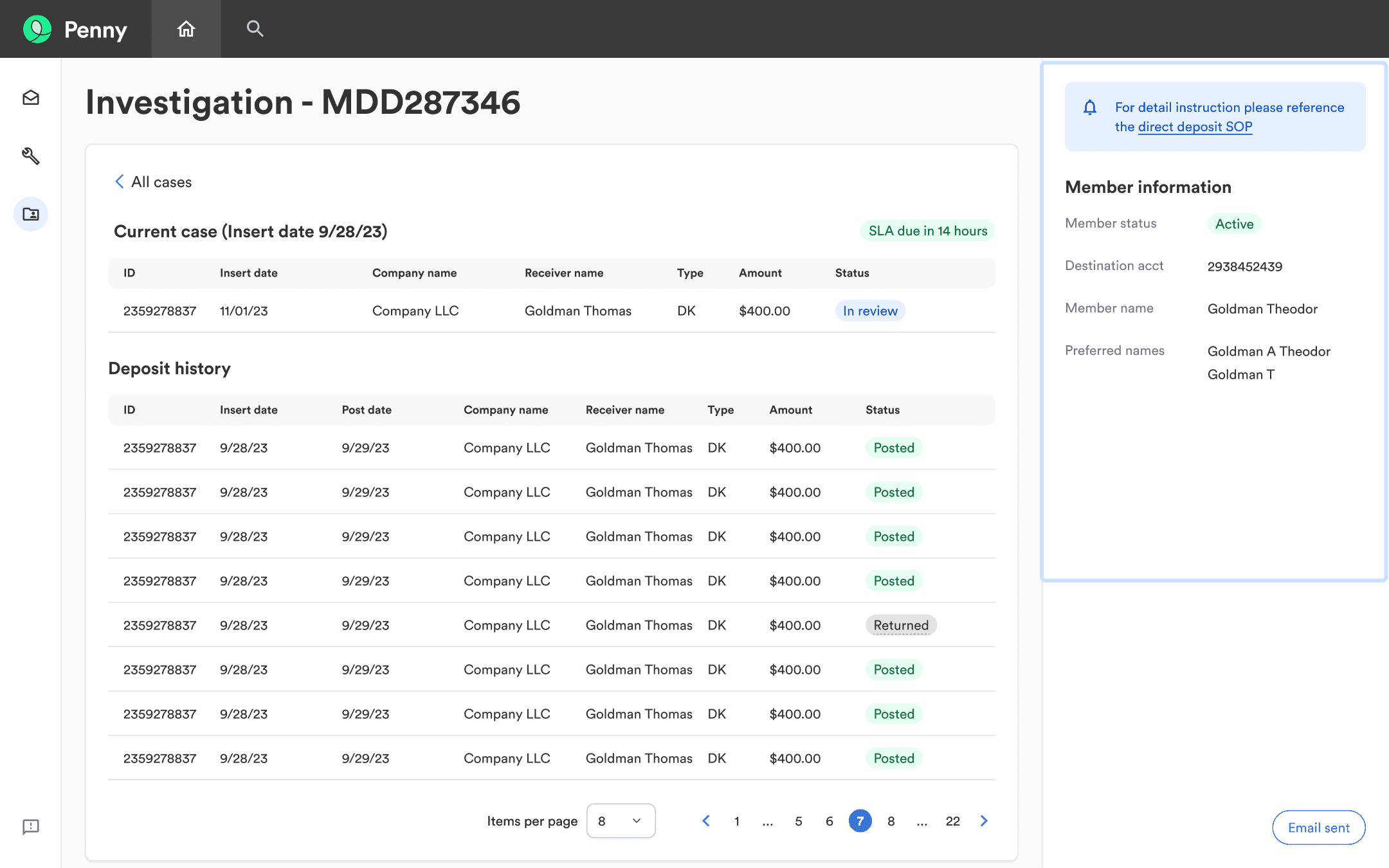
They can access member context instantly

We provided in-context access to member data and historical activity via dynamic side and bottom panels, reducing context switching and cognitive load for agents.
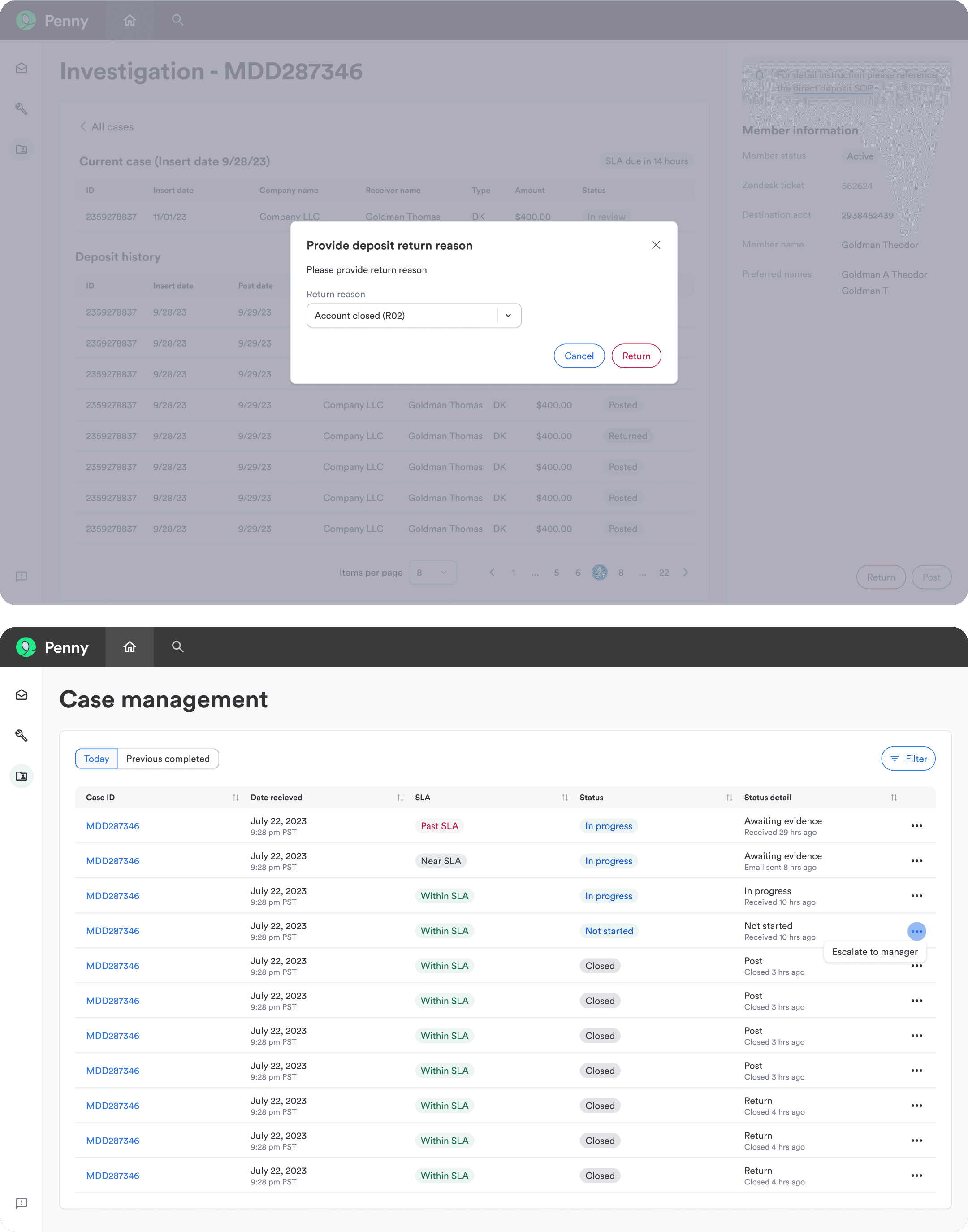
They can view follow-ups or escalate when needed

We transformed informal escalations and processes into a clear, predictable in-product experience that guarantees speed and quality for every case while providing a clearer and more intuitive flow for agents.
Impact

Impact

Impact

The new case management platform reduced risk, improved efficiency, lowered cost, and built a scalable foundation for future growth.

Cases accurately resolved within SLA

+0%

+0%

+0 points

+0 points

Support NPS

Annualized cost savings

$0

$0

What I learned

Systems thinking

I learned to think holistically and design for the whole system, not just one team. It takes longer and is harder, but ensures the design and feature will scale in the future.

Simplifying complexity

I learned that quality matters more than speed. Making information easier to find and workflows easier to follow reduced mistakes, helped agents work more confidently and save the company money.

Collaboration

I had to work across the entire risk and support org which entailed so many teams. I learned to get buy-in and maintain alignment from a large group of stakeholders in the context of a large, longer-term project.

Next Steps

Next Steps

Next Steps

To reduce manual effort, the next iteration would introduce AI-powered document scanning and OCR (optical character recognition) to automate identity verification. This would shift agents away from repetitive checks and toward reviewing only cases that failed or required additional scrutiny.

AI/OCR Auto-ID Verification
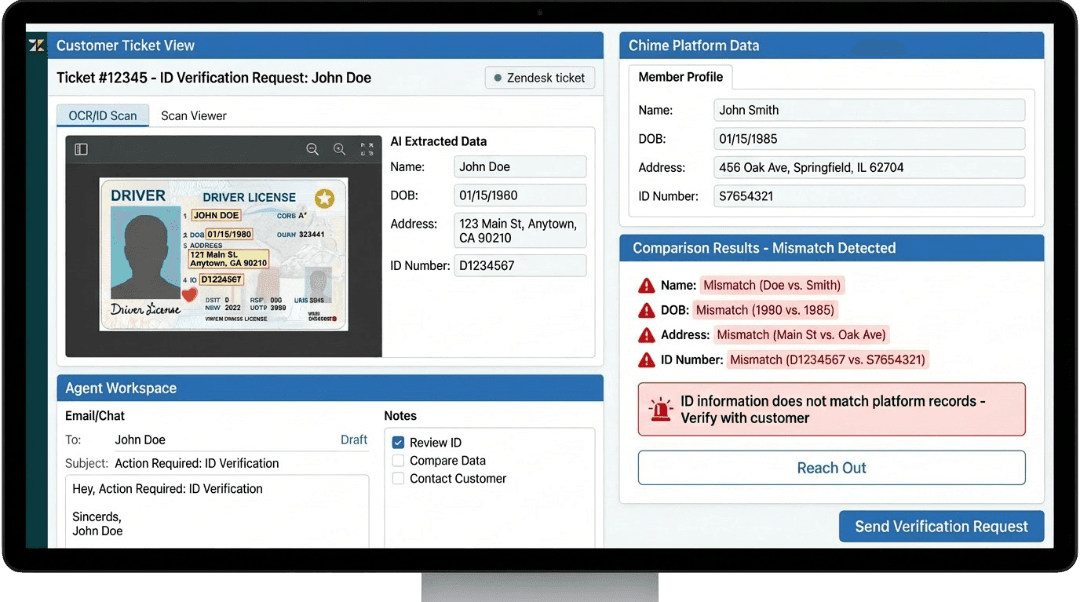
Conceptual image created with Nano Banana Pro AI

NEXT CASE STUDY

NEXT CASE STUDY